
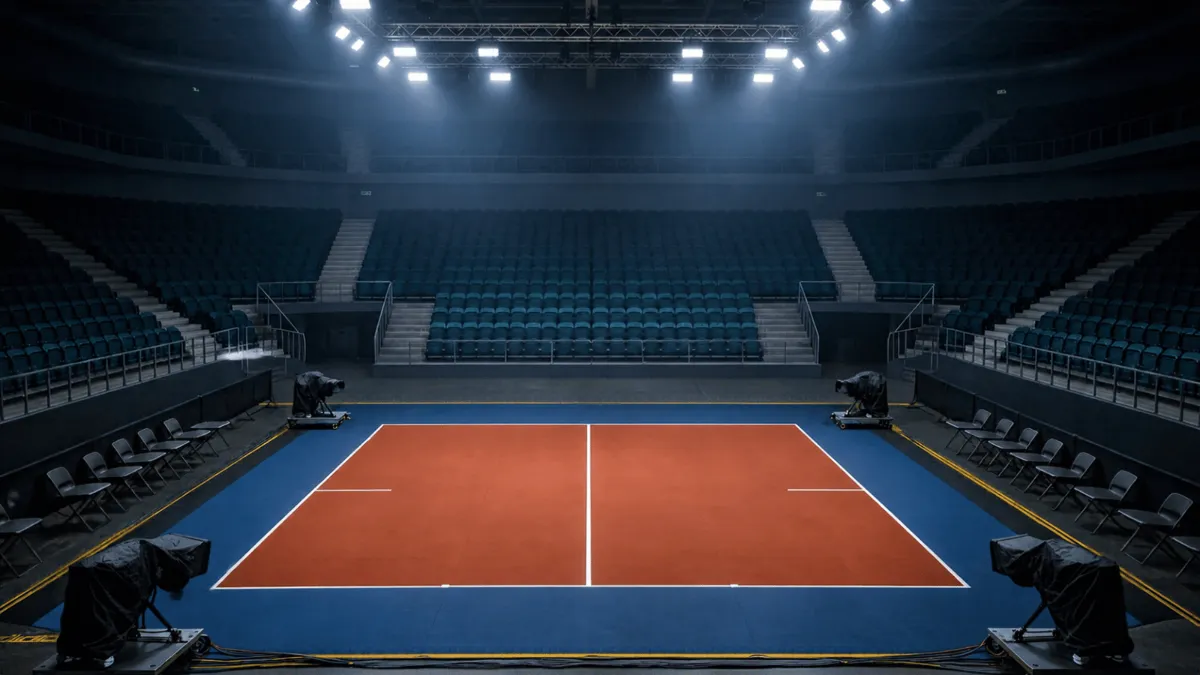
An empty kabaddi mat at the centre of an indoor arena under overhead lighting rigs

Every Pro Kabaddi League Champion, Season by Season

The Pro Kabaddi League launched in 2014 and turned a village sport into a televised one. Twelve seasons in, eight different franchises have won it, which makes it one of the less predictable leagues in Indian sport.

Below is the complete champions list, the finals that produced them, and the records that have accumulated along the way.

Champions by season

SeasonYearChampionRunner-up
122025Dabang Delhi K.C.Puneri Paltan
112024Haryana SteelersPatna Pirates
102023Puneri PaltanHaryana Steelers
92022Jaipur Pink PanthersPuneri Paltan
82021Dabang Delhi K.C.Patna Pirates
72019Bengal WarriorsDabang Delhi K.C.
62018Bengaluru BullsGujarat Giants
52017Patna PiratesGujarat Giants
42016Patna PiratesJaipur Pink Panthers
32016Patna PiratesU Mumba
22015U MumbaBengaluru Bulls
12014Jaipur Pink PanthersU Mumba
Seasons 3 and 4 were both staged in 2016, when the league ran two editions in one year.

The most recent final

Dabang Delhi K.C. won Season 12 by beating Puneri Paltan 31-28 at the Thyagaraj Indoor Stadium in New Delhi on 31 October 2025. Puneri Paltan had topped the league stage but could not find momentum in the final, and a tackle by Fazel Atrachali in the closing minute settled it.

Two details made the night unusual. Delhi became the first home team since Season 2 to lift the trophy in their own city, and Atrachali, named the season’s most valuable player, confirmed his standing as the most successful overseas player in the league’s history.

Most successful franchises

TitlesFranchiseSeasons won
3Patna Pirates3, 4, 5
2Jaipur Pink Panthers1, 9
2Dabang Delhi K.C.8, 12
1U Mumba2
1Bengaluru Bulls6
1Bengal Warriors7
1Puneri Paltan10
1Haryana Steelers11
Patna’s three titles came consecutively and remain the only hat-trick in the league.

Patna Pirates have not won since 2017 despite reaching two finals in the seasons since. Puneri Paltan took eight seasons and three losing finals before converting in Season 10.

League records

  • Most raid points: Pardeep Narwal, 1801. He remains the only player past 1500.
  • Most tackle points: Fazel Atrachali, 597, the highest by any defender and by any overseas player.
  • Teams: 12, unchanged across recent seasons.
  • Different champions: 8 from 12 editions.

The split between those two record holders reflects how the league is scored. Raiders accumulate points faster because a raid can return several at once, while a defender almost always earns them one at a time.

Where the competition sits now

Dabang Delhi remain the reigning champions. Season 13 is the next edition of the league, and these figures are current to the close of Season 12 in October 2025.

Kabaddi has also widened beyond the one competition. A Kabaddi Champions League launched in Haryana, with Rohtak Royals taking the inaugural title in February 2026 after a 32-30 win over Bhiwani Bulls in Sonipat, and the domestic national championship continues alongside the franchise game, with Indian Railways winning the 72nd Senior Men’s National title in Vadodara in 2026.

How a team actually wins

Finals in this league are rarely decided by raiding alone. Nine of the twelve champions have had a defence ranked in the top three for tackle points, because an all out swings two points and resets the mat, and the sides that avoid giving one up tend to survive the knockouts.

If the terminology above is unfamiliar, our guide to kabaddi rules and scoring explains raids, bonus points and super tackles from the beginning.
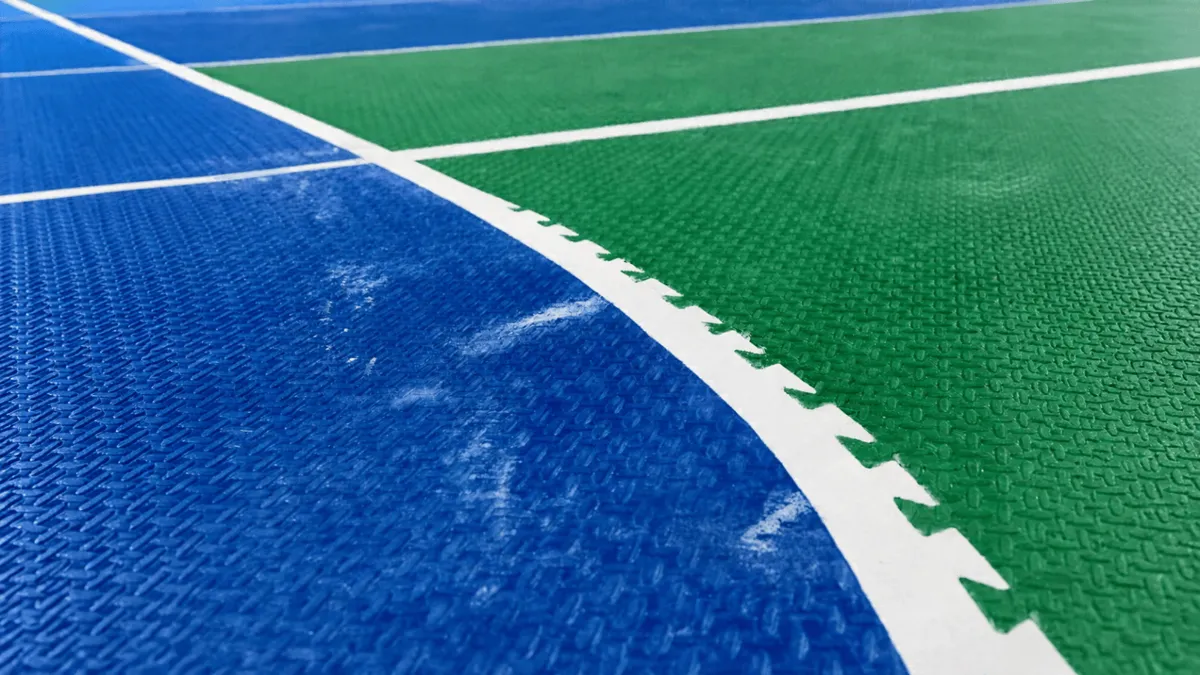
Close-up of an indoor kabaddi mat showing the white boundary and baulk lines on a blue and green surface

Kabaddi Rules and Scoring: Raids, Bonus Points and Super Tackles

Kabaddi is a game of controlled risk. One player crosses into enemy territory, tries to touch an opponent and get home, and seven defenders try to stop them returning. Every rule in the sport exists to govern that single exchange.

The version described here is the indoor standard used in professional leagues and international competition.

The mat and the lines

A men’s court measures 13 metres by 10 metres, divided into two halves. Each half carries three markings that decide points.

LineWhere it sitsWhat it does
Mid lineCentre of the matSeparates the two halves; crossing it starts a raid
Baulk line3.75 m from the mid lineThe raider must cross it for the raid to count
Bonus line1 m beyond the baulk lineCrossing it can earn an extra point
Lobby1 m strip along each sideOut of play until contact is made, then live
Women’s courts are slightly smaller at 12 m by 8 m.

The lobbies are the detail that catches new viewers. They are not in play at the start of a raid, so a raider stepping into one is out. The moment a tackle is attempted, the lobbies become live for everyone involved in that exchange.

How a raid works

Each side sends a raider into the opposition half in turn. Seven players from each team are on the mat.

  1. The raider crosses the mid line and must chant “kabaddi” continuously, in a single breath. This is the cant, and losing it ends the raid.
  2. The raid has a time limit of 30 seconds.
  3. The raider must cross the baulk line for the raid to be valid. A raid that does not reach it is an empty raid.
  4. Touching one or more defenders and returning across the mid line scores a point for each defender touched. Those defenders leave the mat.
  5. If the defenders tackle the raider and hold them until the raid ends, the defending side scores one point and the raider leaves the mat.

Players sent off return one at a time as their own team scores, in the order they went out.

The bonus point

If at least six defenders are on the mat, the raider may cross the bonus line and earn one additional point, provided they have one foot in the air and the other beyond the line. The bonus can be taken alongside touch points, so a single raid can return several points at once.

The six-defender condition is the trade-off. As a defence is thinned out, the bonus disappears and the raider has to win points by contact alone.

The super raid

A raid returning three or more points, by any combination of touches and bonus, is a super raid. It carries no extra scoring value but is tracked as a statistic and tends to decide close matches.

Tackles and the super tackle

A standard successful tackle is worth one point. When the defending side is down to three or fewer players and still stops the raider, it counts as a super tackle and is worth two.

That rule changes how a trailing team defends. With three players left, a defence has an incentive to commit to the tackle rather than retreat, because the reward doubles.

All out

If every player on a side is sent off, the opposition is awarded two points and both teams return their full seven players to the mat. The all out is the single largest swing in the game, and protecting against it shapes most tactical substitutions.

Match structure

  • Two halves of 20 minutes each, with a five-minute interval.
  • Seven players on the mat per side, with substitutes available.
  • Each team may call time-outs, usually two per match of 30 seconds each.
  • If scores are level at the end, competitions may use extra raids or a golden raid to separate the sides.
  • A do-or-die raid applies when a team has two consecutive empty raids: the third must return a point or the raider is out.

The do-or-die rule was introduced to prevent teams from running down the clock with harmless raids, and it is responsible for a large share of the risk-taking in professional matches.

Terms worth knowing

TermMeaning
CantThe continuous chant the raider must maintain
Empty raidA raid returning no points for either side
Do-or-die raidThe third raid after two empty ones, which must score
Ankle holdA defensive technique gripping the raider’s ankle
DashPushing a raider out of bounds to win the point
Toe touchA raider’s low, extended touch on a defender
Commentary leans heavily on these terms, particularly during league coverage.

Where the professional game sits

Kabaddi’s profile outside South Asia has grown largely through league play, and the domestic competition in India now drives most of the sport’s viewing figures. Our page on every Pro Kabaddi League champion by season tracks who has won it since 2014.